
Culture
7 min read · Japan Hub
Japanese culture rewards small gestures: removing shoes at the door, a quiet train ride, the right greeting at the right moment. These words and phrases help you show respect — the quality locals appreciate most in a visitor.
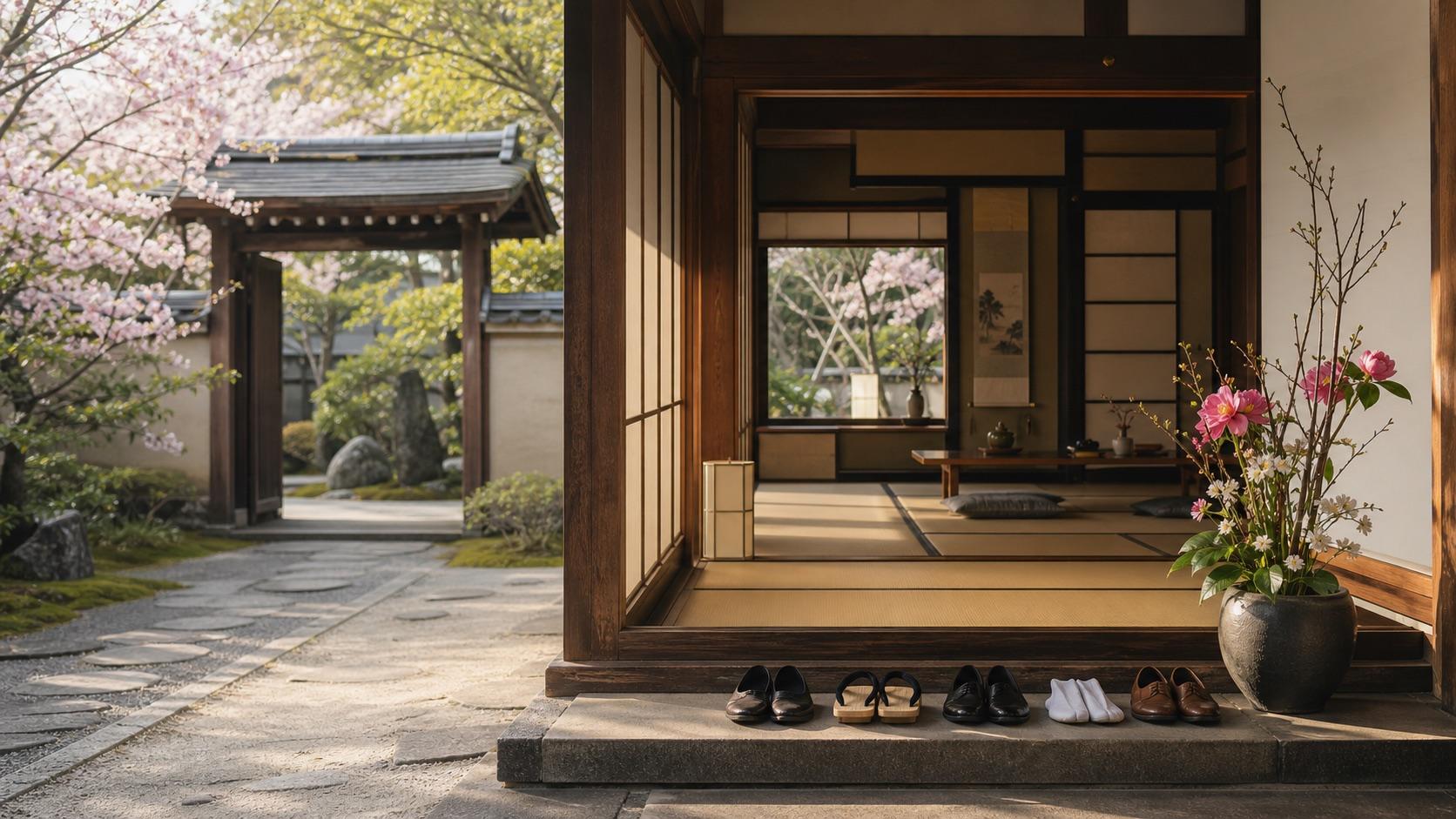
Shoes off, world on
The genkan — the sunken entryway of every Japanese home, many restaurants, temples, and even some clinics — is a boundary between outside and inside. Shoes stop there, always. When in doubt, look down: a step up plus a row of slippers means change. Say ojama shimasu as you step up into someone's home; the literal meaning is 'excuse the intrusion,' and the felt meaning is 'I know I'm a guest, and I'm grateful.'
The quiet rules
Japan's social fabric is woven from small, quiet considerations. Phones go silent on trains. Conversations drop to a murmur. Lines form without anyone announcing them. None of this is stiffness — it's a shared agreement that public space belongs to everyone. As a visitor, you only need two tools: observation and sumimasen, the all-purpose 'excuse me / sorry / thank you' that smooths every accidental misstep.
Shrines and temples are not museums
A torii gate marks a shrine (jinja); an incense burner usually means a temple (tera). Both are living places of practice. You're welcome — genuinely welcome — to visit, but ask before photographing people, bow lightly at the gate if you want to follow custom, and keep voices low. The phrase shashin o totte mo ii desu ka ('may I take a photo?') is the most disarming sentence in your toolkit.
Words to pack
Tap any word to hear it spoken.
Phrases you'll actually use
Click the speaker icon to hear the pronunciation.
お邪魔します
おじゃまします
Excuse me for intruding (entering someone's home)
写真を撮ってもいいですか
しゃしんをとってもいいですか
May I take a photo?
靴を脱ぐべきですか
くつをぬぐべきですか
Should I take off my shoes?
よろしくお願いします
よろしくおねがいします
Pleased to meet you
お疲れ様です
おつかれさまです
Thank you for your hard work
すみません
すみません
Excuse me / Sorry