
Japanese Food
6 min read · Japan Hub
Food is the fastest way into Japanese culture — and the easiest place to use your first phrases. Learn the words for what's on the menu, how to order with confidence, and the etiquette that makes staff and locals smile.
The menu is the first test
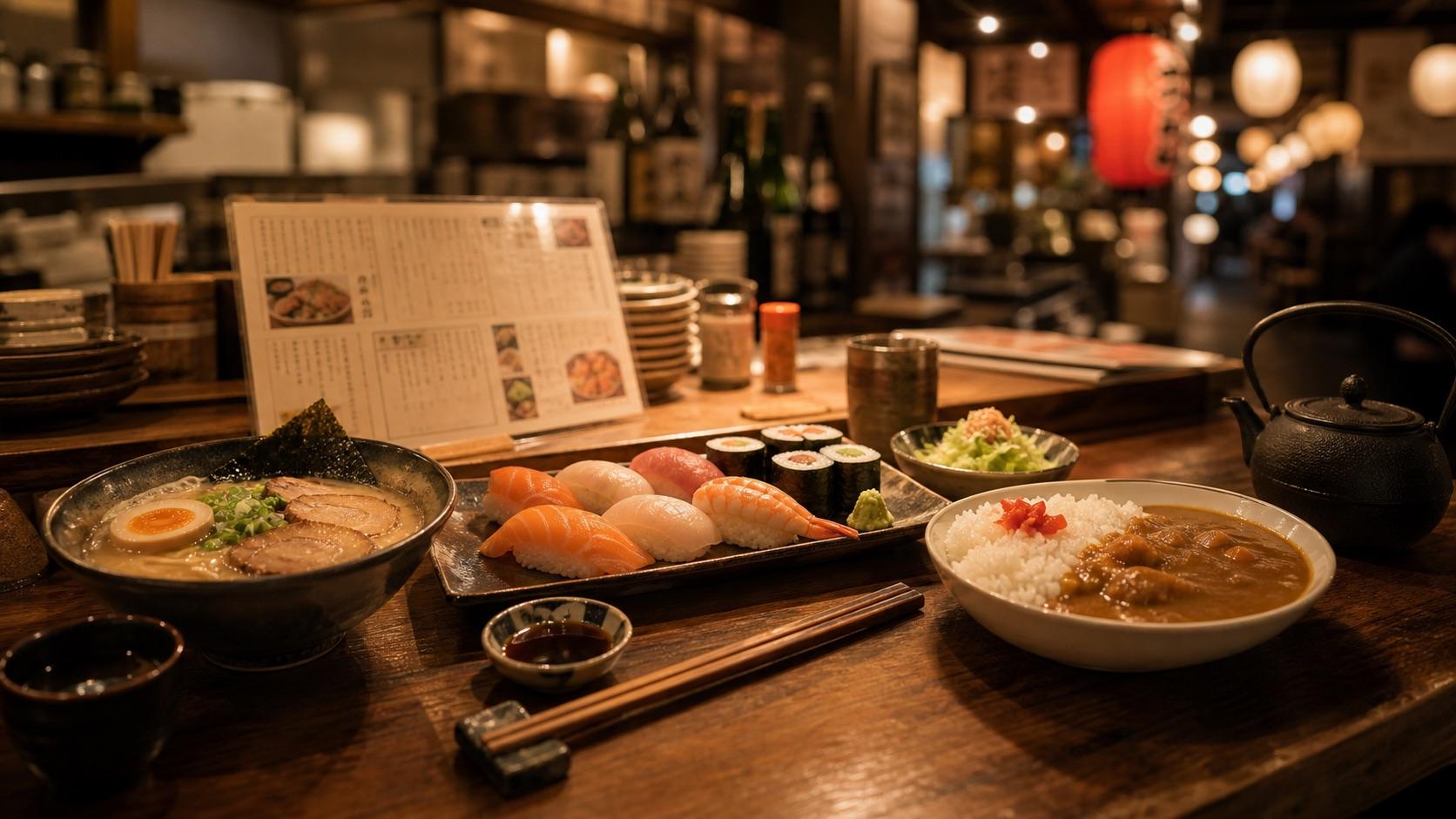
Your first restaurant in Japan is a small rite of passage. Maybe it's a ticket-machine ramen shop where you pay before you sit down, or a teishoku counter where the day's set meal is scrawled on a board in handwriting no textbook prepared you for. Here's the secret: you don't need to read everything. You need about eight words — ramen, teishoku, okawari — and one golden phrase: osusume wa nan desu ka. Ask what they recommend, and most chefs light up.
Slurping is a compliment
The etiquette that worries travelers most is mostly easier than they fear. Slurp your noodles — loudly, proudly; it cools them and signals enjoyment. Say itadakimasu before the first bite and gochisousama deshita on the way out, and you'll have outperformed ninety percent of visitors. The one real rule: never stick chopsticks upright in rice. It echoes a funeral rite, and it's the fastest way to make a room go quiet.
Find the yatai
If your trip allows one detour, make it a yatai — the open-air food stalls that appear at dusk, most famously along the rivers of Fukuoka. You'll sit elbow-to-elbow with locals, eight stools to a kitchen, and the language barrier melts under a shared bowl of tonkotsu. Order one thing, react with a heartfelt oishii, and let the counter conversation carry you. This is where phrases become friendships.
Words to pack
Tap any word to hear it spoken.
Phrases you'll actually use
Click the speaker icon to hear the pronunciation.
おすすめは何ですか
おすすめはなんですか
What do you recommend?
メニューをください
メニューをください
Menu, please
いただきます
いただきます
Thank you for the food (said before eating)
ごちそうさまでした
ごちそうさまでした
Thank you for the meal (expression of gratitude after eating).
持ち帰りできますか
もちかえりできますか
Can I take it to go?
お会計をお願いします
おかいけいをおねがいします
The check, please